Opinion and practical guide from the founder of Visit Abuja. Updated October 2026; prices and contact details change, so check before you rely on them.
This week I took my car in to fix the air conditioning. The mechanic gave me a price, I accepted it, and he did the job. Before the day was over, the car had a new fault that cost more than the original repair, and the same mechanic was ready to fix it, for a fee. I am convinced the second problem was created on purpose, so there would be a second bill.
It was not a one-off. I have bought food and watched the seller bag something different the moment I looked away. I have paid an artisan properly, told him clearly he would be paid well, and he still bought fake, cheaper materials and kept the difference. I have met people who say they know a senator, a minister’s aide, or “someone at AGIS” who can fix anything for a fee. Some weeks it feels like everyone is out to get you.
And when you complain, you hear the same line: it is the government, it is the economy, times are hard. I do not accept that. Life is hard in many countries right now. People everywhere are struggling with prices, rent and wages, and most of them still give you the right change and the item you paid for. And here in Abuja, I know traders, drivers and artisans who earn very little and would never cheat a customer. Same economy, same government. The difference is integrity, and integrity is a choice.
This guide is for people coming home from abroad, and anyone who is tired of being played. It covers the tricks you will meet and, more usefully, how to make them hard to pull on you.
Why diasporans get targeted
Some people see a returnee and see a payday. A few things give you away fast: an accent, talking about prices in pounds or dollars, a rental car, and agreeing to the first price without a question. Once you are marked as “diaspora”, the price doubles and new “problems” start to appear.
Generosity is also misread. If you tip before the work is done, or turn a ₦30,000 job into ₦50,000 on day one, many people do not read it as kindness. They read it as “this one does not check”. Being generous is good. Being generous before someone has earned it is how you get taken for more.
At the market and with food sellers
The tricks
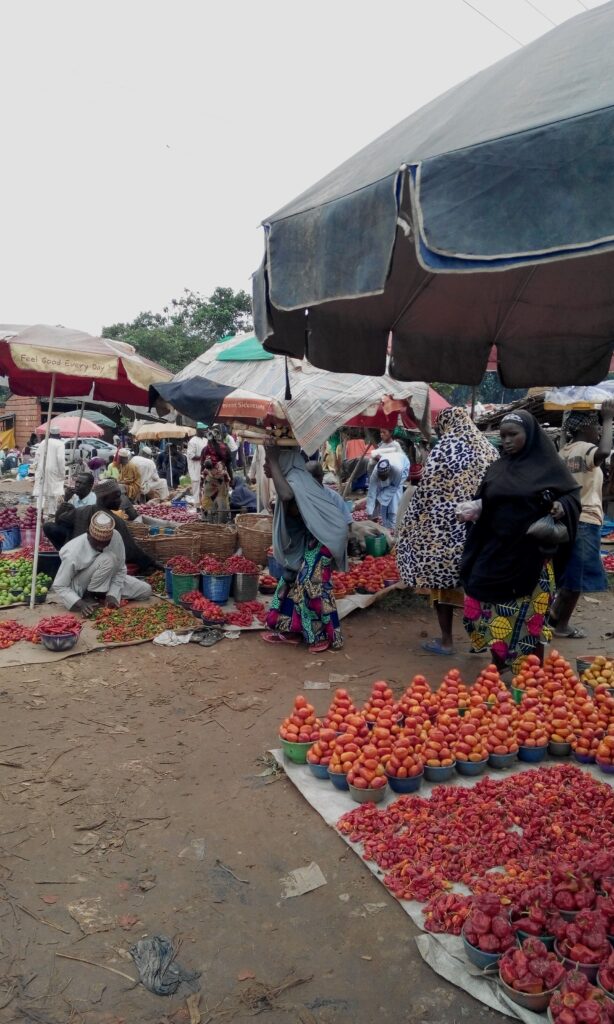
- The swap. You choose good tomatoes, peppers, fish or meat, and while you are paying or talking, the seller bags older or smaller ones from under the table.
- Short measure. Measuring bowls and scales are not always honest. A March 2018 inspection by the federal Weights and Measures Department found underweight rice bags and a gas-filling scale that was short-changing customers by 3kg.
- Wrong change. Change is “short” by a small amount, or the seller “has no change” and offers to owe you.
- The diaspora price. The same item has one price for locals and another for you.
How to protect yourself
- Do not look away while your items are being bagged. Watch the hand, not the face.
- Check the bag before you pay, and again before you leave the stall.
- Bring your own bag or basket so your chosen items go straight into it.
- Ask the price before you touch anything, and agree it before it is weighed or measured.
- Count your change at the stall, not later.
- Go with a local friend the first few times, and become a regular at one or two honest stalls. A trader who sees you every week has more to lose by cheating you.
Artisans and building materials
The tricks
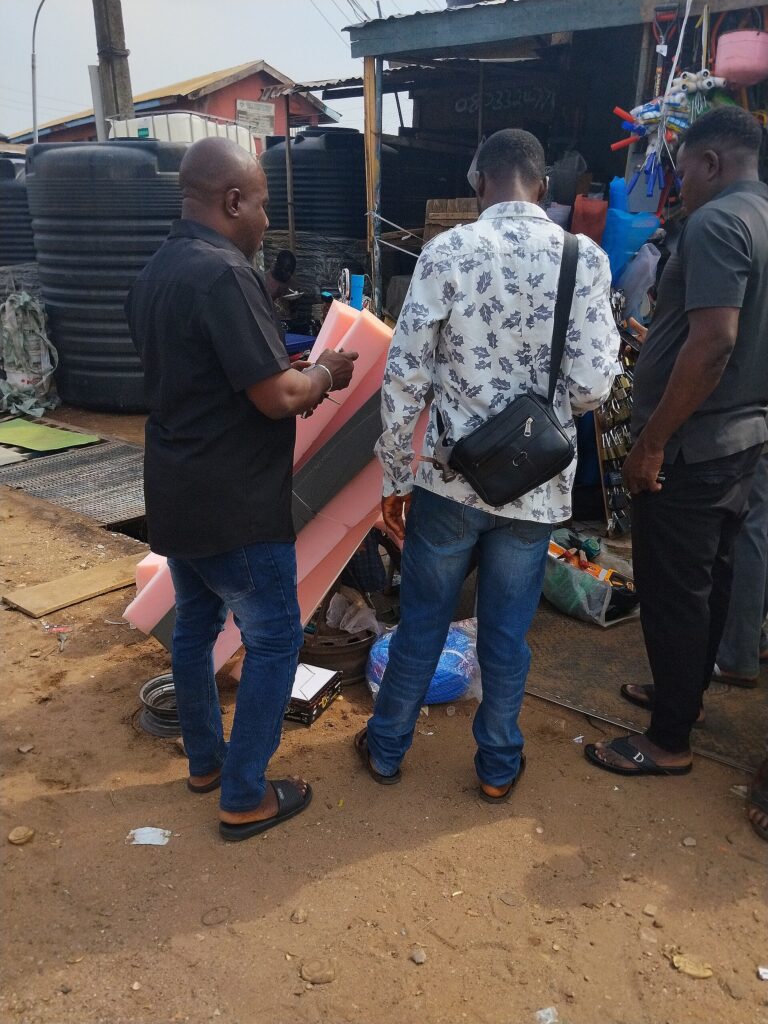
You agree the job, you agree the pay, you even promise a bonus for good work. The plumber, electrician, tiler or painter then buys fake or lower-grade materials, charges you for the real thing, and keeps the difference. You only find out months later when a pipe leaks, a socket burns or the paint peels.
This is not paranoia. A 2019 Daily Trust investigation found unbranded electrical wires being sold under the names of known Nigerian cable brands in markets around Abuja, including Mararaba, some with steel inside instead of copper. In one case it reported, a family’s home wiring caught fire, and the wires had been bought cheaply by the electrician. In April 2026 the FCCPC said it was widening its checks to cables and other building materials because of safety concerns linked to collapsed buildings.
How to protect yourself
- Buy the materials yourself. Ask the artisan for a written list with brand, size and quantity, then buy them yourself or go with them and pay the seller directly.
- Name the brand and check it. Look for clear brand printing on cables, pipes and fittings. Take photos of labels and keep receipts.
- Test cables. A 2019 Daily Trust guide suggests scratching the wire: real copper stays brownish, and a magnet will stick to a wire with steel inside. Thin insulation that cuts easily by hand is another warning sign.
- Keep the leftovers. Ask for unused materials back. If a list said 10 rolls and only 6 were used, you should see 4.
- Pay in stages. Pay for materials, then labour in parts as work is completed and checked. Keep the final payment until you have tested everything.
Mechanics
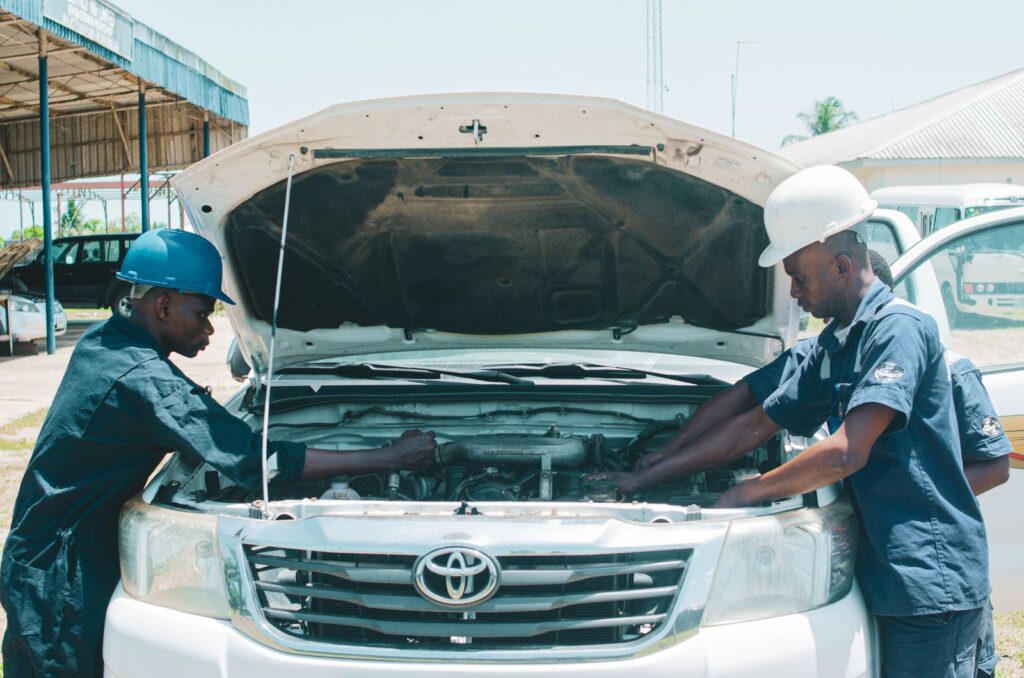
Car repairs are where my own story started, and where many returnees lose the most money.
The tricks
- The cheap quote, then the “new problem”. A low price wins the job, then another fault “appears” once the car is open, sometimes because a wire, hose or sensor was disturbed during the work.
- Swapped parts. A good part is removed and an old or fake one fitted, or you pay for a new part that was never installed.
- Work not done. You are told the gas was refilled or the filter changed, and nothing was done.
- The middleman’s cut. If a driver or “helper” takes your car in, their share may be in the price. A Nairametrics guide warned years ago that mechanics and drivers sometimes split the extra.
How to protect yourself
- Film the car before you hand it over. Lights, windows, wipers, horn, AC, radio, and the dashboard with the engine running. If something stops working after the job, you have proof.
- Get a written quote on WhatsApp, with parts and labour listed separately, and add: “If you find any other problem, call me before you touch it. I will not pay for work I did not approve.”
- Stay, or send someone you trust.
- Ask for the old parts back.
- Buy expensive parts yourself (compressor, alternator, battery) using the exact part number.
- Test before you pay the balance. Drive the car and run the AC for 10 to 15 minutes first.
Car AC: what to know
- A gas top-up does not fix a leak. If you need gas again in a few weeks, there is a leak. Ask if a leak test is included.
- Too much gas, the wrong gas or contaminated gas can cause new problems, according to a September 2026 guide from Travo, a Nigerian car services company.
- Do not agree to a new compressor on the first visit. Ask for the cheaper parts to be tested first: the fuse, relay and compressor clutch.
- If the AC worked when you arrived and stopped after “maintenance”, check whether the AC fuse or relay was removed.
Rough repair prices in Nigeria (2026)
From published 2026 guides. Abuja is often at the higher end, and prices move fast.
| Job | Typical price |
|---|---|
| Car AC gas refill | ₦10,000 – ₦20,000 |
| AC hose or valve repair | ₦20,000 – ₦50,000 |
| AC compressor repair or replacement | ₦50,000 – ₦200,000 |
| Front brake pads | ₦20,000 – ₦40,000 |
| Car battery (12V) | ₦40,000 – ₦100,000 |
| Alternator or starter | ₦50,000 – ₦120,000 |
Sources: Naira Autos (April 2026), Travo (September 2026).
A useful note: Apo Mechanic Village is being moved to Wasa District. In August 2026 the FCT Minister said the move should be completed before the end of 2026, so ask your mechanic where they will be working from.
“I know someone”: fake connections and fixers
The tricks
Someone tells you they know a politician, a minister’s aide, a “big man” at AGIS, immigration or a ministry. They can get you land, a contract, a job for a relative, a faster passport or a document “without stress”. They need money first, for “logistics” or “to settle people”. Then the fixer stops answering, or comes back with more excuses and more requests.
Some go further and pretend to be officials. In April 2026 the EFCC warned about a rise in people impersonating its officers, wearing fake uniforms, stopping motorists and accusing people falsely to extort money.
How to protect yourself
- Never pay for “access”. Real government services have official fees, official receipts and official channels. If someone asks for cash to “settle” anyone, walk away.
- Use official channels. For land, start with our AGIS guide and our property buying checklist. For visas and passports, use the official portals only.
- Verify names yourself. If someone claims to work for an agency, call the agency’s official number from its website, not the number they give you.
- Do not share documents. Do not hand over your passport, NIN or bank details to a “contact”.
- Report impersonation. Report fraud to the EFCC through efcc.gov.ng and to the police.
Know someone in uniform
This is Nigeria. Official reporting channels are not always honest, and a complaint can sit on a desk for months while the person who cheated you moves on to the next customer. In my experience, what works is knowing someone: a senior, honest person in the police, the FRSC, the army or another security agency.
Sometimes the best way to get results is a threat. When a mechanic who “lost” your part, or an artisan who disappeared with your materials money, learns that you have someone who can come, the problem is often solved the same day. People who will ignore a polite request, a written complaint and a phone call will suddenly find your money when they know you are not alone.
How to use it
- Build the relationship before you need it. Family, old schoolmates, church or mosque members, colleagues. You want someone you already trust, not a stranger who “knows a soldier”.
- Call them first and ask for advice. They will tell you whether a formal report is worth it, which office to go to, or whether a call from them will settle it faster.
- Let it be known. Often you do not need your contact to do anything. The person who cheated you only needs to know who is behind you.
- Use them to check claims. If someone says they are an officer, or that they know a “big man”, your contact can confirm it with one call.
- Keep it clean. Never pay an officer to “deal with” someone, and do not let it turn violent. The aim is to get back what is yours, not to become the bad guy in the story.
Ground rules for anyone coming home
- Get every price and promise in writing. A WhatsApp message with a date is enough.
- Never pay in full upfront. Pay for materials, then pay for labour after checking the work.
- Tip at the end, and only for good work. Make it a clear thank-you, not a starting bonus.
- Pay by transfer when you can. It leaves a name and an account on record.
- Talk prices in naira only, and do not discuss your foreign salary or savings.
- Build a small trusted list. One mechanic, one electrician, one plumber, one market trader. Test each with a small job first. When you find honest ones, keep them, pay them on time and recommend them.
When you have been cheated
- Record everything: photos, videos, the quote, transfer receipts and dates.
- Go back calmly the same day and ask for the problem to be fixed or your money returned.
- Get a second opinion from someone who does not know the first person.
- Use the trade association. In markets and mechanic villages, section leaders and association chairmen often help settle disputes.
- Complain to the FCCPC about a business or a substandard product. Its contact page (checked October 2026) lists complaints.fccpc.gov.ng, 0805 600 2020, 0805 600 3030 and [email protected]. The head office is at 23 Jimmy Carter Street, Asokoro, Abuja.
- Report theft or fraud to the police. The FCT Police emergency line is 0803 200 3913. For larger fraud, report to the EFCC.
- Call your contact. If the official route goes nowhere, this is where knowing someone in uniform makes the difference.
The bottom line
Hard times are real, but they are not an excuse. Plenty of people in Abuja live on very little and still sell you the right tomatoes, use the right cable and give you the right change. Find those people, keep them, and pay them well. For everyone else, put it in writing, watch closely, test before you pay, never pay upfront for “access”, and make sure you have someone honest in uniform you can call.
For more ways to protect yourself, read our guide to common scams in Abuja, and if you have just landed, start with your first 48 hours in Abuja. Been cheated and want to warn others? Tell us your story.
Cover photo: Wuse Market, Abuja. Photo: EsthyR, CC BY-SA 4.0, via Wikimedia Commons