
One of my favourite things about Abuja is how quickly the scenery changes when you start driving out of town. You can leave a restaurant in Maitama, pass through the outer parts of the city and, before long, the buildings thin out and the landscape becomes hills, farms, villages and open road. Abuja sits in a part of Nigeria where the terrain naturally lends itself to road trips, and some of the places people associate most strongly with the capital are technically outside the Federal Capital Territory.
That makes Abuja a good base if you have more than a few days and want to see something beyond restaurants, malls and city attractions.

The obvious first trip is Zuma Rock.
You do not really understand how large Zuma Rock is until you are near it. Photographs make it look like a big mountain beside the road. In person, it feels as though somebody dropped a massive wall of stone into the landscape. It stands near Suleja in Niger State, along one of the major approaches into Abuja, and the Niger State Government identifies it as one of the state’s major tourism assets.
For many visitors, Zuma is best treated as a scenic excursion rather than a serious climbing trip. Go for the views, take photographs from appropriate locations and, if you want to explore more closely, use a local guide or organised experience that knows the access arrangements. This is not one of those places where you should see a rock on Instagram, park the car somewhere random and start climbing because “Google Maps said twelve minutes.”
Nigeria will humble you.
If you want to make more of the trip, there are accommodation and leisure options around the Zuma area, so it can become an overnight escape rather than a quick roadside stop. The attraction here is not a long list of things to tick off. It is leaving Abuja, seeing the landscape change and waking up somewhere quieter with the rock dominating the horizon.
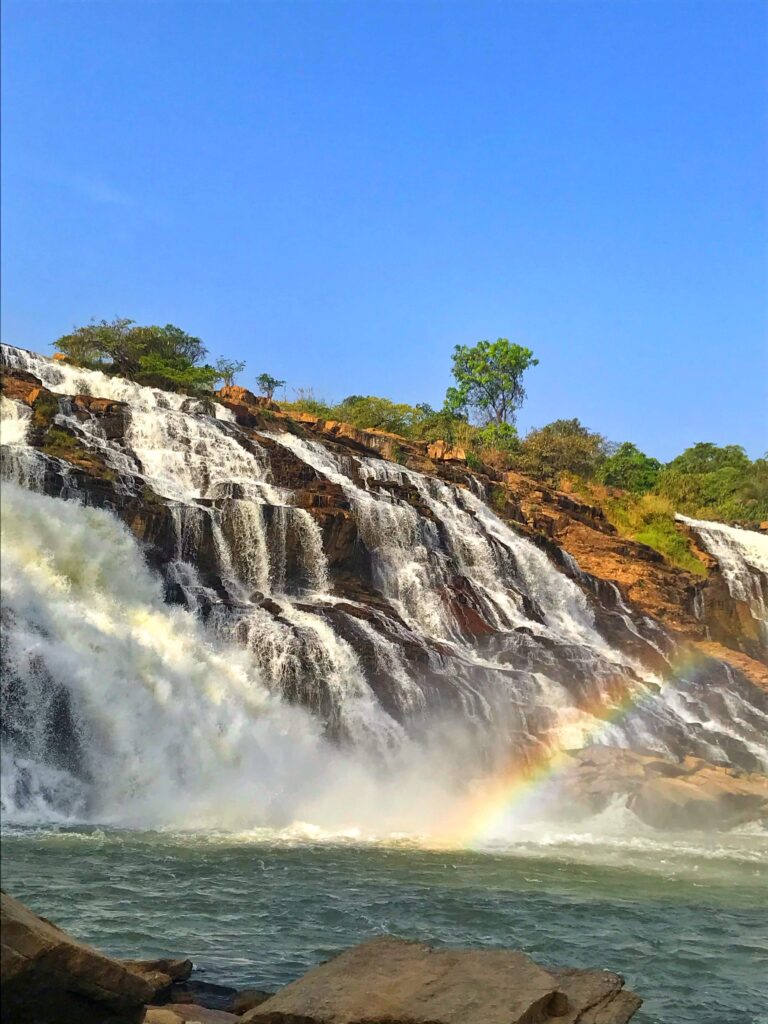
A more ambitious day trip is Gurara Waterfalls.
Gurara is in Niger State along the Abuja to Minna corridor and is another tourism site officially recognised by the state. The waterfall is most dramatic when there has been enough rain to feed it properly, while the surrounding landscape also becomes greener in the wetter months. Niger State has identified Gurara for further tourism development, so visitors should expect a natural attraction rather than a polished resort experience with every facility you might find at a heavily developed international site.
That is part of the appeal, but it also means you should prepare properly.
Leave Abuja in the morning. Carry water. Take snacks or arrange food. Wear shoes that can handle uneven ground and confirm local access before travelling. If it has been raining heavily, do not assume that because somebody went close to the water in a TikTok video you should do the same. Waterfalls are beautiful. They are also water moving over rocks at speed. Common sense is free.

Another easy direction from Abuja is Suleja itself. Many people pass through without thinking about stopping, but the town has a strong pottery association. The Niger State Government specifically identifies the Dr Ladi Kwali Pottery Centre in Suleja, reflecting the area’s long connection to pottery and ceramic craft.
This is a better trip for somebody interested in Nigerian craft, design and making things than for somebody looking for a big attraction. It gives you a chance to see a different kind of town, spend time around pottery and understand how traditions that visitors usually encounter as finished souvenirs begin with actual skill and labour.

You do not even have to leave the FCT completely to get that feeling of getting out of Abuja.
Bwari, to the north of the main city, has long been associated with pottery and a more rural landscape. Kuje gives you another direction entirely, with farms and countryside on the southern side of the territory. ALMAT Farms in Kuje has developed into a countryside leisure property with accommodation and activities, which makes it useful if you want an easy overnight break without committing to a long interstate drive.
These places are especially good if you are travelling with family or simply want to spend one night somewhere with more open space. Abuja can be peaceful, but there is a difference between a quiet street in Maitama and waking up somewhere where the loudest thing nearby is probably a bird or somebody starting a generator.
Lower Usuma Dam is another place people often mention when talking about Abuja’s scenery. The reservoir and surrounding hills are beautiful, especially when the landscape is green. But this is also important water infrastructure, and parts of the area are controlled. Visit only areas where access is permitted and do not assume a scenic location is automatically a public tourism site. The Federal Capital Development Authority continues to maintain water treatment infrastructure connected to Lower Usuma Dam, so respect any security or access instructions you encounter.
This is a general rule worth remembering outside central Abuja. Some places are famous locally long before they are organised formally for tourists. You may find limited signage, changing access rules or no official ticket office. That does not make them bad places to visit. It simply means you should plan like somebody travelling in the real world and not somebody following a ten second reel.
Ask your hotel. Ask a trusted driver. Call ahead where possible.
If the road has changed, listen.
If somebody local tells you not to go somewhere that day, no vex. Go and eat.
For a one day escape, Zuma Rock or the countryside around Kuje are the easiest places to build around. For a longer day with more driving, Gurara Falls makes sense. For a slower overnight stay, look at Zuma or a countryside property in the FCT.
What these trips add to an Abuja holiday is perspective.
The capital can sometimes feel almost too organised compared with the rest of Nigeria. Broad roads, planned districts, diplomatic buildings and newer restaurants can make a visitor forget how quickly the country changes once you move beyond the city centre. A day on the road reminds you that Abuja is surrounded by a much older landscape.
You go out in the morning, come back dusty and tired in the evening, shower and somehow still find yourself outside again looking for dinner.
Na Nigeria.